News
An interview on island biodiversity and conservation with Ashton Melfor
How did you end up studying pollinators? And why on Curaçao?
Sort of by accident, really. I am a plant/vegetation person first, which is why I have been volunteering with CARMABI, helping out in their greenhouse since high school. However, since I was a child, I was collecting caterpillars and taking care of them to see what they would turn into (with no intention of it being part of my career). One day Erik Houtepen from CARMABI invited me to join him and Andre van Proostdij in the field, and I took my butterfly net and caught a couple of specimens. At that time, I started collecting butterflies more seriously as a hobby. Andre then connected me with Hajo Gernaat from Naturalis, which then led me to Vincent Kalkman. He then informed me of their intention to conduct part of the ANTENNA research on one of the Caribbean islands. Ultimately, when I had to choose a topic for my MSc thesis, my nr 1 criterion was that it should be related to Curaçao because many ecological questions remain unanswered in this region. So combining my at-the-time newly established connections with Naturalis and the realisation that pollinator research on the island was a relatively unexplored territory seemed like the logical choice.
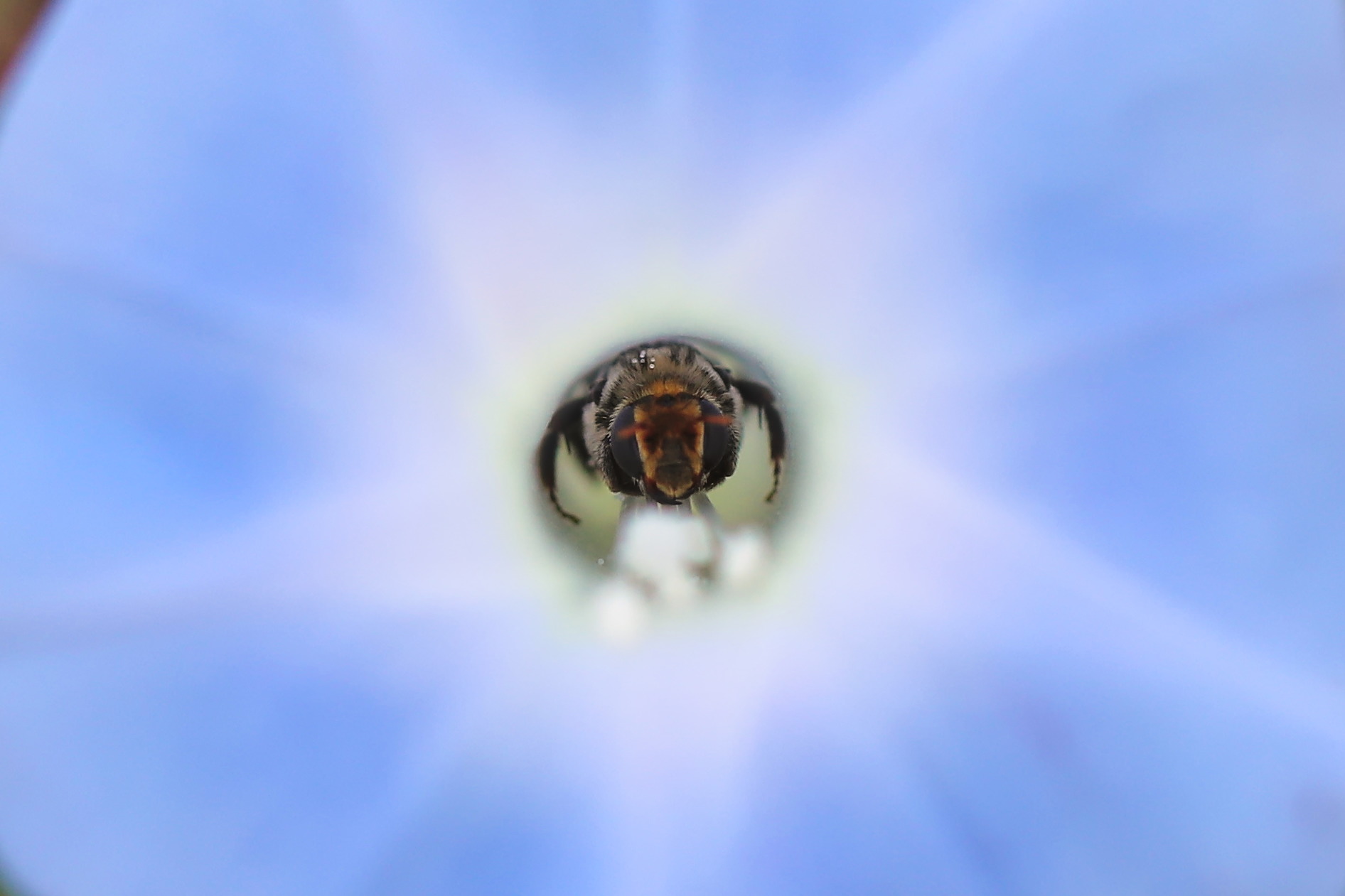 Melitoma segmetaria
What was the main goal of your research? And why is it important to understand pollinators in an island ecosystem like Curaçao's?
The main goal of my research was to provide the first comprehensive mapping of pollinator communities on Curaçao and the role of floral resources in shaping these communities. Curaçao's ecosystem is very interesting for many reasons. It's an oceanic island relatively close to the mainland, located in the tropics yet very dry, and has diverse geological conditions, just to name a few. Understanding Curaçao's pollinator communities and the elements that shape them in this unique combination of conditons furthers our knowledge of island plant-pollinator systems in the tropics and provides crucial information for pollinator conservation.
What are your favourite pollinator species that you can find on Curaçao and why?
The very first pollinator species I was fascinated by was the Monarch butterfly, of which the subspecies megalippe is found on the island. After getting to know the bees of the island, I can now add the orchid bee (Euglossa dilema) to the list, as it combines two of my favourite things, orchids and the colour green. It's nr 1 on my list to photograph on my next trip back.
The ANTENNA project is about using modern tools to monitor pollinators, what tools did you use and how do they compare to the traditional methods you have used?
I used the Diopsis and MiniMon cameras during my fieldwork. I would say that these more modern systems underperformed significantly compared to traditional transect walks and even pan-traps. The primary reason is that these systems were designed for relatively accessible field locations and open short vegetation. In a system such as Curaçao, where the vegetation is tropical dry forest and open shrubland, pollinators aren't always so close to the ground. On top of that, the density of floral resources and pollinators in such a dry environment is lower than in temperate systems. I would expect to see more insects captured on these cameras in Dam habitats compared to the rest, as it has a vegetation structure and floral resource density more comparable (to some extent) to managed grasslands in Europe.
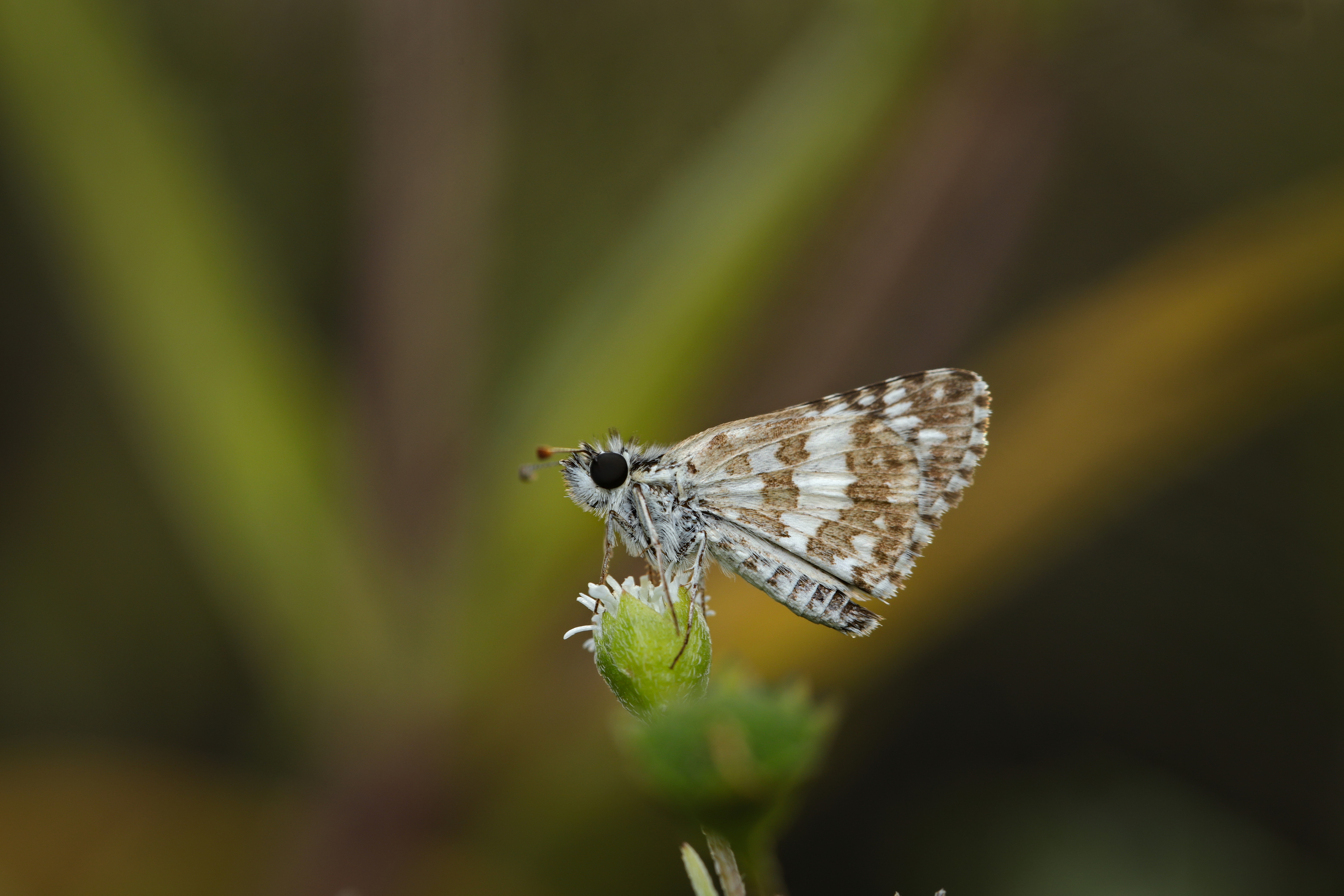 Burnsius orcynus
Fieldwork on a geologically complex island like Curaçao must be both rewarding and difficult. What did a typical field day look like and what challenges did you experience?
It sure is. Starting your day at 6- 7 a.m. with a short hike to your transect is not uncommon. I would usually start by setting up the pan-trap, followed by the two cameras. When that is done, conduct the flower survey. Then I have some time before I have to do the transect walks, during this time, I either explore the wider area and collect anything interesting or do nothing because the location is one of the many that has 0 flowers as far as the eye can see. This is also one of the challenges with doing pollinator research on the island, even in the wet season, you can have areas with little to no flowering plants (sometimes because you just missed the flowering period). This means sometimes recording 1 or 2 pollinators during a transect walk. Carrying all the field equipment up and down steep inclines or for long distances under the Caribbean sun also adds an additional layer of difficulty. The Diopsis in particular gave some trouble, as certain locations do not have a good internet connection, so if the system is not working properly and doesn't save the images locally, you are likely to have a failed day for that camera.
How do you hope your results will influence the broader goals of ANTENNA and/or monitoring research on pollinators in general?
Firstly, I hope that my research helps inform conservation actions in the Caribbean that target pollinators specifically. Second, this work could hopefully lead to future semi-automated monitoring systems that are more tailored to the unique conditions on Caribbean oceanic islands.
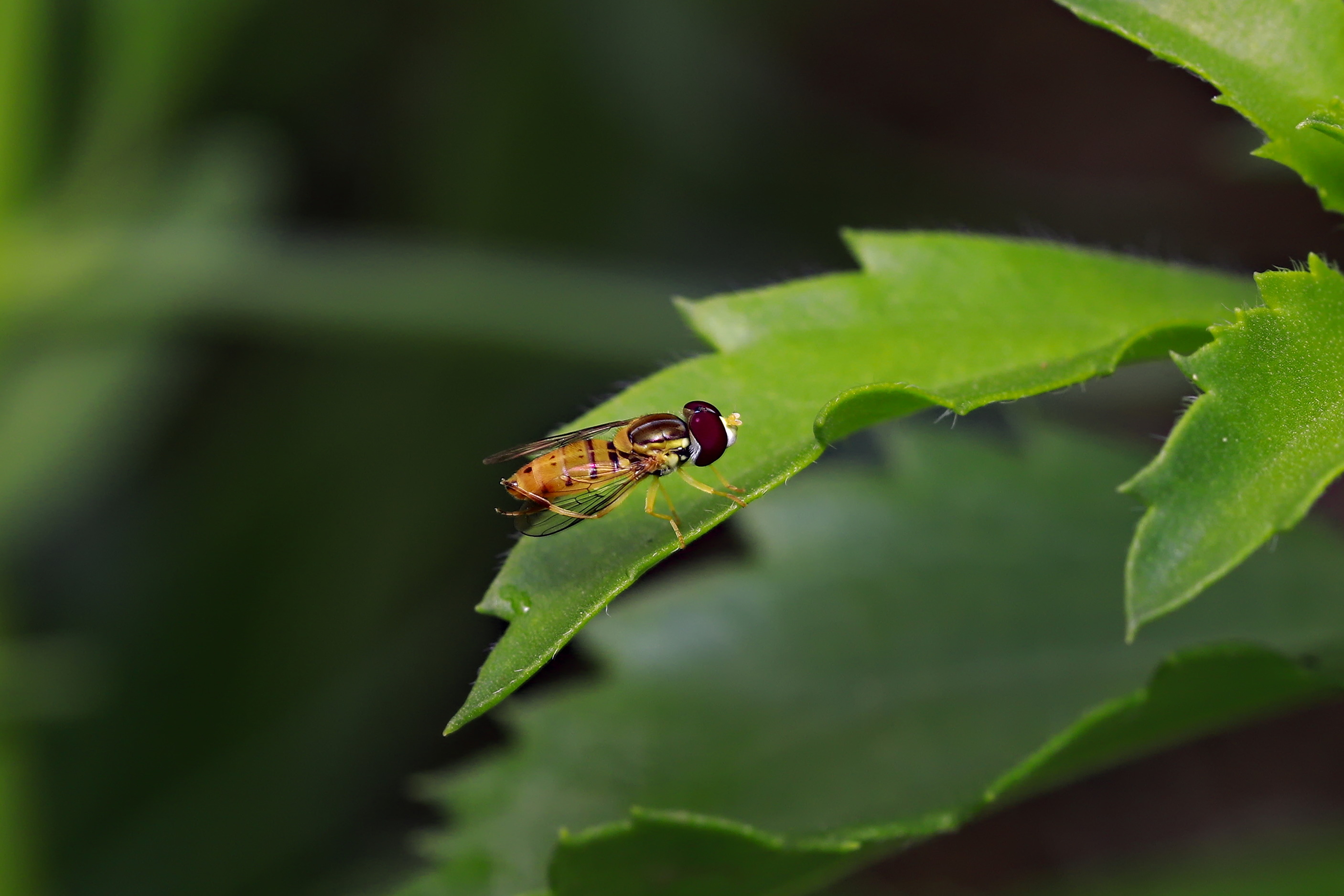 Toxomerus watsoni